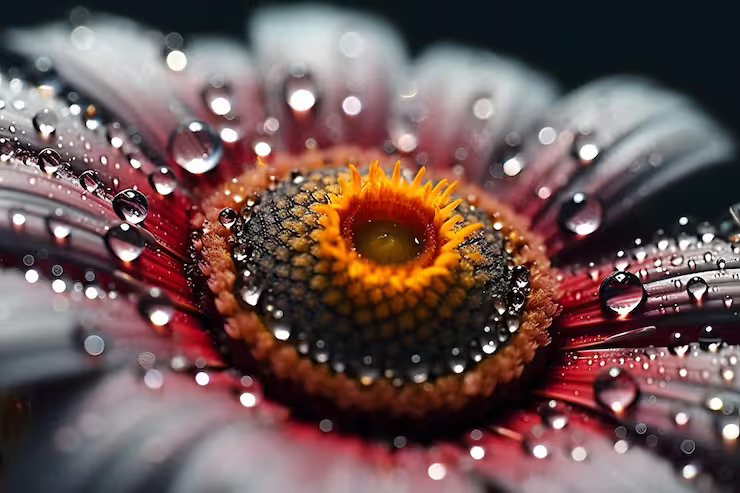
Macro photography phone technology focuses on capturing extremely close-up images with high detail. It allows users to photograph tiny subjects such as insects, textures, water droplets, and small objects that are often invisible to the naked eye. With the rise of smartphone imaging, features like macro photography iphone capabilities and dedicated macro camera phone systems have made this technique widely accessible.
Close-up shots on smartphones aim to deliver sharpness, enlargement, and accuracy - no bulky gear needed. These days, handsets equipped with dedicated macro lenses tweak focus and light settings by themselves when near a subject, smoothing the process whether you’re just starting out or have been shooting awhile.
Macro Camera Phone Technology Explained
Close-up photography in phones uses unique glass elements combined with digital tweaks. Instead of standard parts, these cameras get sharp at tiny ranges - think two centimeters up to ten. Details that escape the eye show up clear because light bends just right inside. What looks like a flat surface might reveal hidden patterns when shot this way.
Unlike standard lenses, macro camera mobile systems include:
- Short focal length optics
- Advanced autofocus systems
- AI-based image enhancement
- Depth mapping for sharp subject isolation
When phones handle close-up shots, code inside does heavy lifting. Getting near your target flips the camera into special setting by itself. This shift keeps details sharp while reducing warped edges. Close work gets smoother because smarts adjust behind the scenes.
importance and real world applications
Starting close-up shots with phones opens doors in both work and art. Because tiny lenses now clip onto hand-helds, snapping fine details isn’t just for experts anymore.
Key Applications
- Nature photography: Capturing insects, flowers, and leaves
- Product detailing: Highlighting textures and materials
- Education: Studying small objects in science and biology
- Content creation: Enhancing social media visuals
- Checking health by looking at skin or surfaces with eyes only
Close-up shots with an iPhone work well when people make things and want sharp images but prefer not to bring extra gear. A.
Phones With Macro Cameras
Some newer smartphones pack special tools for snapping sharp shots up close. These tweaks help capture tiny details more clearly. Tiny subjects look better thanks to upgraded lenses and software tricks. Close-ups gain clarity through clever tech built right in. Little improvements add up when focusing on small things. Smarter settings make near objects stand out sharply. Upgraded hardware boosts how well cameras handle tight spaces.
Essential Features
- Dedicated macro lens for close focusing
- Smart cameras spot scenes on their own. These systems tweak settings once they recognize what's being filmed. Changes happen without needing a person to step in
- Optical image stabilization for clarity
- High-resolution sensors for detail capture
- HDR support for balanced lighting
Not every phone camera handles close-ups well, yet some combine wide-angle setups with macro ability by default. This overlap adds flexibility without needing extra hardware.
Macro Camera Mobile Systems Variations
Close-up shots on phones come from mix of lens tricks and smart code. Some models pack tiny lenses up front, others rely on digital tweaks behind scenes. Hardware changes shape light entry, while software sharpens what sensor catches. Each method bends rules a bit differently. Results depend on how pieces work together, not just one part alone.
Common Types
- A close-up specialist takes the frame here. This one does nothing but magnify small subjects sharply. It swaps distance for detail up front. Focus shifts from far to near exclusively. Precision replaces general purpose entirely
- Ultra-wide macro mode: Uses ultra-wide lens for close focusing
- Clip-on macro phone camera lens: External accessory for magnification
- Software-based macro mode: Digital enhancement without dedicated lens
One kind brings different benefits. Take macro phone setups - these usually work through smart programming alongside sharp sensors.
Macro Camera Methods Compared
Dedicated Macro Lens. Ultra Wide Macro Mode. External Lens Option. Image Quality Varies. Built In Versus Add On. Device Dependent Performance. Convenience Of Integration. Accessory Based Expansion. Flexible With Extras. Ease Differs By Setup.
Macro photography phone systems provide several advantages compared to traditional cameras.
Key Benefits
- Built to move easily, there is nothing heavy to carry along. Equipment stays light because bulkiness gets left behind
- Instant editing and sharing
- AI enhancements for better results
- Affordable access to macro photography
- Multi-lens integration in one device
A tiny camera attachment for phones turns close-up shots into something anyone can try, even without knowing much about tech. Not magic - just fits right on, opens a world of small details normally missed by regular phone lenses.
Challenges and Limitations
Even with progress, capturing tiny subjects up close using phone cameras still falls short in some ways.
Common Challenges
- Limited optical zoom compared to DSLR cameras
- Noise in low-light conditions
- Shallow depth of field issues
- Difficulty maintaining focus on moving subjects
Still, better macro lenses on phones keep making close-up shots easier over time.
Recent Trends and Developments 2025 to 2026
A tiny lens up close - phone cameras now capture details once missed. Last year brought changes, small but clear. What seemed blurry before now shows texture, depth, a different world hidden near our feet.
Latest Trends
- AI-powered macro enhancement (2025): Improved detail reconstruction
- Hybrid macro lenses (2025): Combining ultra-wide and macro functions
- Computational photography updates (2026): Better noise reduction and clarity
- Sensor upgrades (2025–2026): Larger sensors for improved light capture
- Real-time macro video recording (2026): Enhanced close-up video capabilities
Focusing closely, iPhone setups now shift lenses by themselves while holding the image steady. A smoother capture comes through smarter tech built right in.
Rules and Right Choices
Though shooting tiny subjects faces few limits, some rules still apply
Important Considerations
- Avoid disturbing wildlife when capturing insects
- Respect privacy when photographing personal objects
- Follow environmental protection laws in restricted areas
- Ensure ethical use in educational or medical contexts
Using a macro lens on your phone comes with duties. Because clear close-ups reveal more than intended, care matters. When details pop so sharply, thoughtfulness counts. Since tiny subjects fill the frame, respect grows. Through this tool, awareness spreads quietly.
Learning Macro Photography Tools and Resources
Some apps plus gadgets make close-up shots easier to practice. A few websites along with devices guide people through better detail-focused pictures. Tools exist alongside software to sharpen how you photograph small things. Learning sharper macro work happens using certain programs together with hardware aids.
Useful Tools
- Mobile editing apps for sharpening and color correction
- Online photography courses
- Camera manual settings tutorials
- Macro lens accessories for smartphones
- Photography communities and forums
Start by cleaning the lens gently before attaching it to your phone. Focus on one object at a time instead of cluttered scenes. Natural light works better than flash in most cases. Position yourself slightly off center for more interesting shots. Hold still a moment after tapping the capture button. Try different angles even if they feel awkward at first. Zooming with your feet beats digital zoom every time.
FAQs
What is macro photography in smartphones?
Close-ups of tiny objects on phones happen through special lenses or built-in tools that adjust focus up close. Tiny details become visible because the camera can lock onto nearby surfaces quickly. Some phones use extra glass elements while others rely on smart processing tricks behind the scenes. What you see sharply might blur on older models without these upgrades. Getting near a subject changes how light enters, so adjustments are needed. These tweaks let everyday devices show hidden textures in ordinary things.
How does macro photography iphone differ from other phones?
Most iPhone macro setups depend on strong software tuning along with good sensors, usually pairing ultra-wide cameras that switch to close-up mode by themselves. What matters most is how well the phone processes tiny details when zoomed in tight.Some phones skip the macro lens entirely. Instead, they rely on ultra-wide options. Software tricks fill in where hardware does not exist. Not every device needs special gear for close-ups.
Can I use an external macro phone camera lens?
True, those attachable lenses might boost zoom power while sharpening fine elements, particularly on gadgets missing native close-up functions.
How close should you hold your phone for sharp macro shots?
Beyond ten centimeters, sharpness tends to drop off quickly with most phone macro lenses. Up close - just past two centimeters - is where details start to blur unless carefully adjusted. Some light shifts, a slight hand movement, everything changes at that range. Tiny distances make huge differences in how things come into view. Focus locks only under very specific conditions near the lens. Each millimeter forward or back alters the image more than expected. Clarity peaks somewhere in the middle of that narrow window. Too near, too far - both ruin what the system tries to capture.
Conclusion
Close-ups on phones feel different these days. Tiny things once hard to see now fill the screen sharp and clear. Because of better lenses built into smartphones, snapping detailed shots happens without extra gear. Some still struggle with focusing too closely, yet fixes come often through smarter software updates. Each new model seems to push what small-scale photo taking can do. Progress keeps moving even if results sometimes fall short.
Peering into the way a phone's macro lens functions, together with what it can do and where it fits in daily life, helps people get full value from it. When used for art, learning, or everyday tasks, close-up shooting still plays a key role in today’s mobile picture-taking.