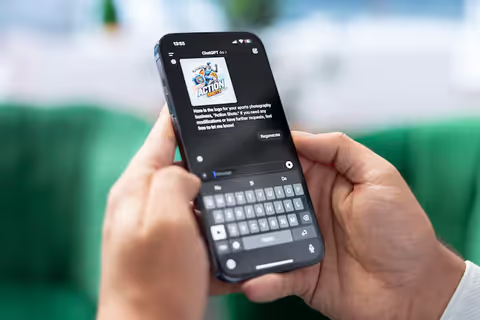
Secure messaging apps are digital tools designed to protect communication through encryption and privacy-focused features. A secure chat app ensures that messages, calls, and shared files remain accessible only to the intended participants. As online communication becomes central to daily life, secure messaging platforms play a critical role in safeguarding personal, professional, and sensitive information.
Most times, a safe messaging tool wraps messages in code so outsiders cannot peek.These codes lock the message right when it leaves your phone. Only the person getting it can unlock what you sent. That unlocking happens after it arrives at their device. Scrambling keeps anyone else from reading along the way.
Key Working Mechanisms
- Encryption keys are generated uniquely for each conversation
- Messages are scrambled into unreadable formats during transmission
- Whoever gets the message is the only one who can unlock it
- Servers cannot access the content of encrypted messages
Messages vanish after being seen, while face scans confirm identity - extra steps that block outsiders. A phone check happens too, stacking shields without slowing things down. Security slips into place quietly, working whether noticed or not.
Secure Messaging Matters in Today’s Conversations
Now more than ever, messages need protection from leaks, spying, eyeing. Protection lives inside messaging tools built tight. These apps guard words so they stay secret, untouched, even if secrets pass through wires. When details matter, trust rides on how well the talk stays locked.
Secure Messaging Keeps Conversations Private
- Protects personal and financial information
- Stopping sneaky spying or being followed without permission
- Secret messages stay safe during company talks
- Ensures compliance with data protection laws
- Reduces risk of identity theft and cybercrime
Most folks point to Signal when talking secure apps - its tight encryption sets a standard. Data stays out of reach because the app grabs so little to begin with.
Secure Messaging Apps Key Features
Hidden messages sit behind locks that only you control. Pages load fast even when signals run weak. Typing feels smooth on any device size. Codes change every few seconds without asking. Faces stay blurred unless you tap once. Words vanish after they are read. Keys live inside your pocket, not someone else's server.
Core Features
- Multi-device synchronization with security checks
- Backups locked away, safe only if you’ve got the key. Otherwise? Nothing saved at all
- Anonymous registration options
- Screenshot protection in some apps
What sets Signal apart is how it builds strong privacy tools, yet shares every line of its software publicly. Open access defines its approach - no hidden layers, just clear coding anyone can check.
Some messaging tools lock down your words tight. Others leave gaps a spy could walk through. One kind keeps secrets by design. Another might hand them out without asking. What you get depends on how it's built. Hidden codes inside decide who sees what. Built-in shields block eavesdroppers sometimes. Weak spots appear when shortcuts are taken. Trust grows only if proof shows up. Empty promises do not count here.
Recent Trends And Developments 2025 To 2026
Messages stay safer now because tools keep changing along with rules that shape them.
App developers reworked backend systems just to stay compliant. Even small changes in policy triggered updates across platforms worldwide. As a result, encryption methods evolved under pressure from new legal demands. Still, user trust remained tied closely to transparency during this transition.
Depending on where they are used, secure messaging apps follow different laws. While one country might allow certain features, another could restrict them entirely. Where rules apply shapes how these systems function behind the scenes. Because regulations differ, companies must adjust their methods carefully across borders. Even when technology stays the same, legality shifts with location.
Important Regulations
- General Data Protection Regulation (GDPR) in Europe
- Law on digital matters exists in India alongside guidelines for handling personal details
- California Consumer Privacy Act (CCPA) in the United States
Consent matters most here, yet rules push clear limits on how much info gets collected. Still, certain officials keep circling back to built-in access points in coded messages, sparking fresh rounds of talk - how safe is too safe when secrets slip.
Understanding secure messaging applications can be enhanced through various tools and educational resources.
With these tools around, getting a clear picture of secure messaging becomes easier for both regular folks and experts. A clearer path opens when learning how such systems work behind the scenes. Instead of guessing, people find their footing through guided insight into what makes communication safe.
FAQs
What is a secure messaging app?
Messages stay safe inside an encrypted chat tool because it locks down conversations, voice talks, and file sharing using built-in privacy controls. What keeps outsiders away isn’t just one layer - it’s how coding shields every piece sent through the system. Hidden details travel quietly between users, guarded by design so only intended people see them. Protection kicks in the moment something gets typed, ensuring snooping stays impossible during delivery. This kind of setup treats each call like a sealed note - private, untouched, meant for one destination.
How does end-to-end encryption work?
Messages stay private between just two people who exchange them. Nobody else gets through, not even the company running the system. Only those involved hold the keys to what's shared. The platform itself has no way to peek inside.
Are secure texting apps completely private?
Even though encrypted messaging keeps data safe, every setup has its weak spots. Because of this, people must stick to smart habits - using complex passcodes, locking down their gadgets. A good lock on your phone helps when messages are shielded too. Protection works better when layers stack without gaps showing through.
Why is signal app security considered strong?
Most people feel safe using Signal since its code is open for anyone to check. Its privacy setup keeps messages locked down straight away. Few personal details get saved when folks chat through it. Because of how it shields conversations, trust builds naturally over time.
Secure messaging tools - do companies actually make use of them?
True, plenty of groups rely on encrypted chat tools to keep talks private, meet rules, protect information. Some pick them just to guard files others need proof they’re following laws yet everyone wants safety in messages sent fast through these apps even when teams work far apart one day it might be voice next day text still the core stays shielding words from outsiders always.
Conclusion
These days, messages stay safer when apps lock them up tight. Locked conversations keep strangers out, thanks to hidden codes underneath. Protection shows up quietly in everyday chats, not just business talks. When software guards words well, trust grows without needing to explain how.
Messages stay safer now because updates bring tougher codes, clearer settings, one app at a time. Private talks grow stronger when tools follow worldwide rules, shift with new threats, piece by piece.