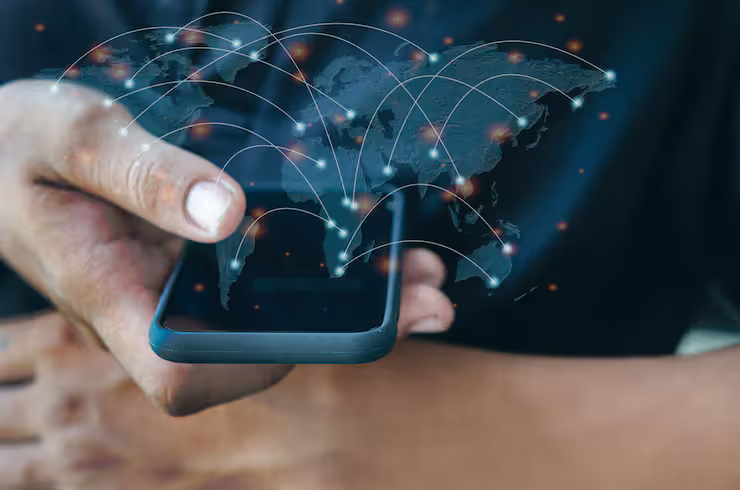
Global mobile networks connect people, businesses, and devices across countries through wireless communication systems. These networks support voice calls, mobile internet access, messaging, and connected applications on smartphones, tablets, laptops, and smart devices.
Traveling abroad? Mobile networks today keep people linked without a hitch. Thanks to tools like 4G and newer 5G systems, staying online feels natural almost anywhere. Toss in satellites working alongside ground setups, plus smart software managing things from afar. That mix powers portable internet boxes and shared connections you find in terminals, lodgings, work buildings, or parks. Smooth links happen because pieces fit together behind the scenes.
Stability in cross-border connections matters more these days. That shift comes from how many people work from home, attend class online, or depend on cloud tools. Instead of offices, laptops and phones keep teams linked worldwide. Even tourists expect strong signal coverage wherever they go. Mobile networks stretch across nations, quietly holding conversations together.
Global Mobile Networks Explained
Out near city edges, cell signals bounce between tall towers and space-flying sats before sliding into underground glass cables. Instead of staying locked in one zone, phones hop across borders using shared deals among distant carriers. Connection stays alive because hardware links up locally, even when users move far from home zones. Information flows without breaks thanks to hidden rooms full of humming machines sorting digital traffic day by night.
Most times, crossing borders lets your phone latch onto another carrier's signal. Because of agreements between companies, staying online happens automatically. Calls go through just like they do at home. Messages send using that borrowed connection instead of your usual one. Internet works too, no extra steps needed. Your number stays exactly the same throughout. Roaming handles the switch behind the scenes.
A single mobile network usually holds multiple levels tied together. Layers connect in ways that keep the system running smoothly. Each part plays a role without standing out too much. Working as one, they manage signals across distances. Connections between pieces ensure messages move properly. These parts link so users stay online constantly.
Key Components
- Cellular towers and base stations
- Core network infrastructure
- Subscriber identity modules (SIM and eSIM)
- International roaming gateways
- Satellite communication support
- Cloud-based traffic management systems
- Authentication and cybersecurity platforms
Global Mobile Connectivity Types
Some ways to connect work better if you move around a lot. Your gadget type might limit what fits your routine. Not every option suits all needs equally well.
A single device keeps people online almost anywhere. Where travel happens beyond cities, signals still reach through space links. Business groups rely on shared networks while moving between countries. Phones and tablets stay active using invisible digital SIM setups. Instead of cables, wireless boxes create zones where devices link up. Cafes offer gateways alongside coffee and quiet corners. Outside city borders, connections survive thanks to orbiting tech above. Workers far from offices pull data through pocket-sized transmitters. Hotels build access into their guest services without extra fees. Tiny chips replace physical cards inside modern handhelds. Airports keep strangers connected before flights take off.
Out of reach? Not when you’ve got a pocket-sized hotspot tagging along through borders. Jumping from one country to another doesn’t kill your connection - local towers keep it alive behind the scenes.
A single device beams internet to multiple people at once across borders. When travelers need steady access, it keeps them online without relying on local networks. Teams meeting overseas find their rhythm faster with constant connectivity. Reporters filing stories from shifting locations depend on its reliability. Workers outside offices stay linked just like they would be downtown.
Global Mobile Communication Matters
Out here, talking across continents shapes how we live today. Because of wireless links worldwide, teams work together despite time zones. When trouble hits, rescue networks activate fast. Moving goods relies on constant signal checks between hubs. Buying online? That runs on cell connections too. Even classrooms stretch beyond borders now.
Communication that spans borders now matters more than ever for companies working in various nations. Because of mobile connections, fields like air travel, medical services, shipping, tourism, and banking can keep moving forward.
Major Benefits
- Continuous communication while traveling
- Improved remote work flexibility
- Faster access to cloud applications
- Better support for international business operations
- Enhanced emergency communication systems
- Access to navigation and travel information
- Support for smart devices and IoT applications
Nowhere near every traveler realizes how much easier it is to get online at airports, thanks to wider Wi-Fi coverage. Stations, campuses, and meeting spots often host reliable signals - making access smoother without extra steps. Some hotels even support strong connections right where people gather most.
How Mobile Networks Work Around the World
These days, how phones connect has changed a lot since ten years ago. Back then, 2G and later 3G carried mostly calls plus slow web browsing. Now, instead, networks like 4G and newer 5G move data fast with barely any delay. Speed took a leap forward thanks to upgrades behind the scenes.
Common Mobile Technologies
- 4G LTE connectivity
- 5G standalone networks
- WiFi 6 integration
- Network slicing
- eSIM technology
- Edge computing
- Artificial intelligence for traffic optimization
Right now, 5G stands out as a major shift across worldwide phone networks. Faster downloads come through it, along with smoother video streams, reduced lag times, also stronger handling of smart gadgets.
Out in the open, some services mix WiFi with cell signals to keep things running smoothly. When people shift from one network zone to another, that blend keeps links steady without hiccups.
Real-World Applications
Out in the world, mobile networks keep many different kinds of work running. People tap into them every day - students learning, companies managing tasks, officials handling public services, folks staying in touch. Connections hum beneath ordinary moments, linking classrooms, offices, streets, homes.
Common Use Cases
- International business communication
- Remote workforce collaboration
- Travel and tourism connectivity
- Smart transportation systems
- Online education platforms
- Digital banking applications
- Emergency response coordination
- Healthcare telecommunication systems
Out in the field, strong mobile hotspots keep people online across borders. Professionals like reporters or analysts stay linked through compact gadgets that handle shifting locations. When work happens worldwide, steady signals matter most. Teams spread overseas depend on these tools just to exchange updates safely. Connectivity moves with them, quietly making daily tasks possible.
Out there, global mobile networks link up all sorts of gadgets - think fitness trackers, self-aware cars, even factory sensors. These connections hum along without fanfare, quietly tying machines together across distances. Not magic, just signals doing steady work behind the scenes.
Problems With Using Phones Abroad
Even so, staying connected worldwide by phone isn’t perfect yet - hurdles pop up now and then. While things have gotten better over time, glitches and system limits stick around too.
Common Challenges
- Network compatibility differences
- International roaming limitations
- Cybersecurity threats
- Signal congestion in crowded areas
- Coverage gaps in remote regions
- Data privacy concerns
- Regulatory restrictions between countries
Not every phone company plays by the same rules when you travel abroad - network access might drop without notice. Where you are matters too; certain governments tightly control how networks run and who handles user data.
Out in the open, public wifi often hides dangers. When signals lack strong protection, strangers might sneak a peek. Weak locks on networks invite trouble without clear warning. Safety slips away fast when safeguards fail.
Recent Trends and Developments
Out of nowhere, mobile networks worldwide shifted fast this past year. Major changes popped up, reshaping how countries stay linked.
Recent Industry Trends
- Expansion of commercial 5G networks in 2025
- Increased adoption of eSIM-enabled devices
- Growth of satellite-mobile partnerships
- AI-based mobile traffic optimization
- Stronger cybersecurity frameworks
- Improved roaming agreements between regions
Broadband carriers began upgrading their independent 5G networks at the start of 2025. Performance rose as a result, enabling more responsive urban tech setups. Instead of relying on older systems, these companies built new signal hubs from the ground up. Traffic lights that adapt to congestion appeared in several metro areas. Unlike previous hybrid models, this version runs entirely without legacy backing. Real-time data sharing between vehicles became smoother too. Expansion targeted locations where delays had been common before. While not every region gained access immediately, major corridors saw upgrades first. Behind the scenes, equipment adjustments allowed faster processing. Cities noticed fewer disruptions once switches went live.
Out in the countryside, signals still struggle - yet tech firms keep pushing updates through satellites. Not quite magic, but closer every year as beams reach farther into isolated spots. Slowly, blank zones on the map start filling in.
Picture this: more people are starting to use eSIMs instead of tiny plastic chips. Phone makers across the globe have begun building devices that let users activate service digitally. Travelers find it easier to change carriers since they no longer need to swap out a physical card.
Policies and Regulations
Most phones connect through systems shaped by telecom rules worldwide. These guidelines come from both national authorities and global groups working together. Rules cover airwave access, online safety steps, personal data handling, plus how devices switch between regions smoothly.
Important Regulatory Areas
- Wireless spectrum management
- Data protection regulations
- Roaming agreements
- Network security standards
- Cross-border communication compliance
- Emergency communication requirements
Starting off, groups like the International Telecommunication Union work to align how nations handle communication rules. On another note, quite a few governments put in place laws that guard personal information gathered through cell networks.
Because rules differ by location, telecom providers handle worldwide cell networks along with customer data according to local regulations.
Tools and resources for learning
From time to time, certain apps give people a clearer picture of how global networks link together. Some websites break down complex connections so they’re easier to follow. A few programs track data flow across borders without extra clutter. Occasionally, software shows who connects where using simple views. Now and then, digital spaces make cross-border links feel less confusing.
Useful platforms and resources
- Mobile sector materials from GSMA
- ITU telecommunications standards
- OpenSignal network performance reports
- Ookla internet speed testing tools
- Cloudflare network analysis tools
- Mobile device management platforms
- eSIM activation applications
From time to time, signals behave differently depending on location - this kind of tool tracks how strong they are. Wherever people move, their connection speed gets recorded and reviewed later. In cities or rural spots, delays show up plainly when systems check activity. Wireless behavior changes, yet consistent observation reveals patterns across areas.
Out there, plenty of learning tools cover wireless engineering - cybersecurity shows up too, alongside telecom systems. Universities toss these topics into their courses, while tech-focused training sites spread them wide. Some pick books, others jump on video lessons; options pop up everywhere you look. Even if the subject feels heavy at first, pathways open after a few clicks or campus visits. Learning never really stops when material flows this freely across classrooms and online spots.
FAQs
What are global mobile networks?
Wireless signals bounce between towers when phones link up far from home. Connections stretch overseas because companies work together behind the scenes. Internet pathways shift data where it needs to go, no matter the border. Cells of coverage tile the world, one tower at a time.
How does global mobile wifi work?
A small gadget grabs signal from nearby cell towers, then turns it into Wi-Fi anyone can tap into without hassle. This hotspot moves with you, linking phones, tablets, laptops through one steady flow of data. Security stays built in, so browsing feels smooth no matter where you land. Each device logs on fast, no extra steps needed.
What is an international 4g hotspot?
A small gadget lets you get online using fast mobile networks when crossing borders. It works in many nations without needing new hardware each time. This tool connects multiple devices at once to data abroad. Travelers carry it easily in a pocket or bag. Mobile signals stay strong in different regions. Four G technology powers the connection everywhere it's supported.
Why is eSIM technology important for travelers?
Switching phones across borders just got simpler because eSIMs let you download carrier plans straight to your device instead of swapping plastic chips. Profiles appear through wireless signals rather than store visits, opening up new ways to stay online abroad.
Are international wifi hotspots secure?
When traveling abroad, some wifi spots protect data through coded signals along with login checks. Still, personal details might slip away on open connections without safeguards in place. Watch where you send private stuff - especially when the network shows no lock symbol nearby.
Conclusion
Nowhere else shows progress like today's mobile networks. These links tie together companies, people on the move, those working far from offices, and smart devices across continents. Speed gets better because 5G spreads fast, digital SIMs adapt easily, data centers shift online, satellites join in. Connection stays strong where it once failed. Improvement happens quietly but constantly.
Across nations, a pocket-sized device beams internet signals through air, linking people without cables. Instead of staying offline during travel, folks tap into wireless networks that follow them from city to city. These tools make sharing files or joining video meetings possible even when crossing oceans. When towers shift from old formats to faster pulses, connections grow sharper, smoother. Hidden inside small boxes, antennas adapt to foreign frequencies like travelers learning dialects. With time, how we talk, buy, move, and manage cities leans more on these invisible threads stitched between countries.